

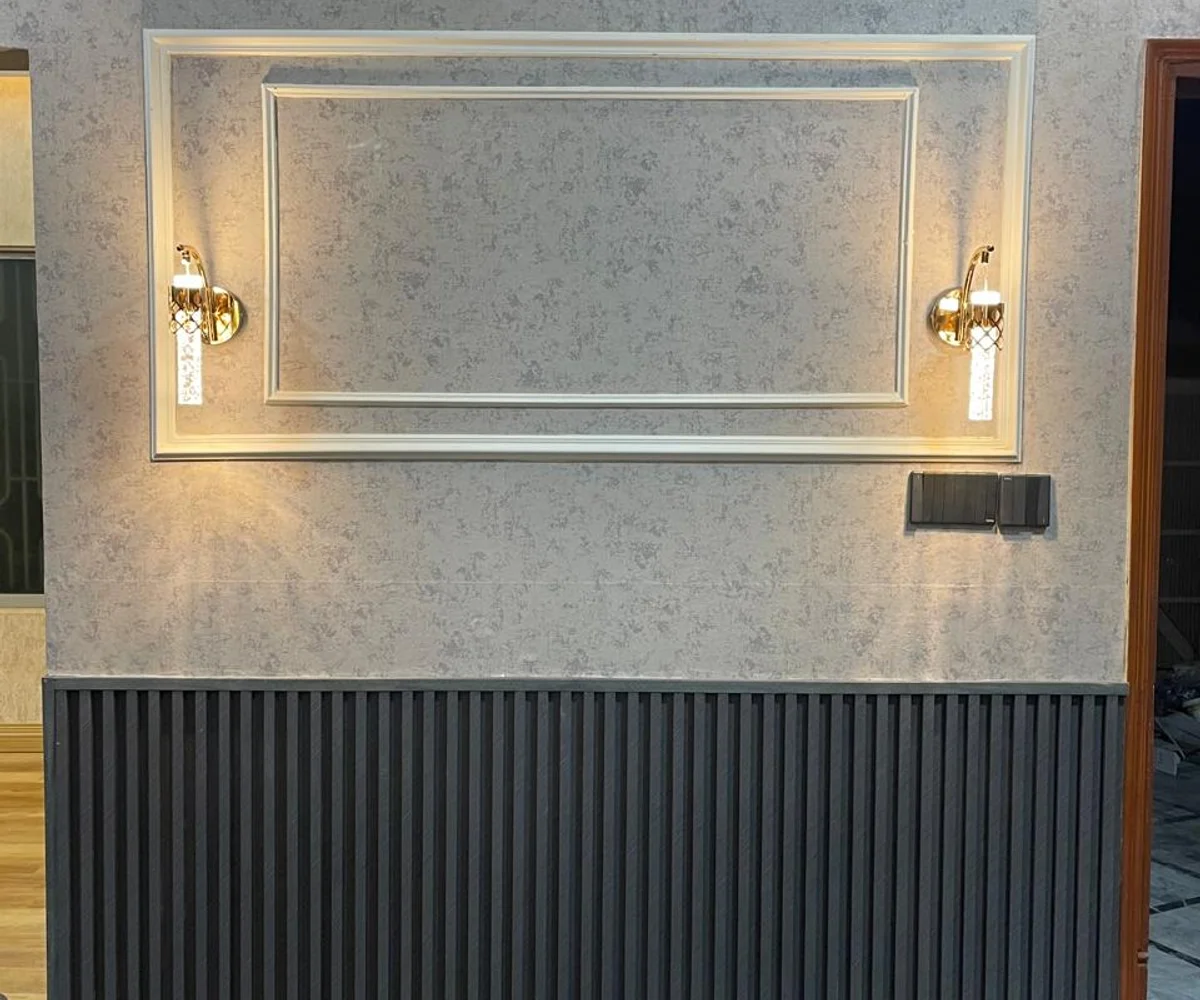
You can install PVC wall panels in a day. The process is: prepare the wall, cut the panels, fit the corner trims, glue the panels, and seal the joints. You need a saw, adhesive, silicone, a level, and a measuring tape. No grout, no paint, no plasterer.
Most people who buy wall panels in Karachi ask me whether they should install them themselves or call a team. Both work. The panels are built for fast fitting. But Karachi walls have two issues that DIY guides from cold countries never mention: damp patches and monsoon humidity. Fix those two things before you start, and the job goes smoothly.
This guide walks through every step in order. It also tells you when to stop and call a professional install team. If you are planning a home renovation in Karachi and the panels are one part of a bigger job, the same steps apply.
For a full house plan, including floors, false ceilings, blinds, and wallpaper, talk to a home interior designer in karachi who handles complete renovation, not just one wall.
What You Need to Install PVC Wall Panels
Collect everything before you start. Stopping mid-job to buy adhesive wastes hours.
- PVC wall panels with matching trims
- Fine-tooth handsaw or jigsaw
- Spirit level
- Measuring tape and pencil
- Construction adhesive (PU or hybrid polymer)
- Silicone sealant
- Masking tape
- Clean cloth
- Utility knife
Buy roughly 10% extra panels. Cutting mistakes happen, and a damaged panel in the middle of a wall is hard to hide. For wet areas like bathrooms and kitchens, buy silicone with a neutral cure so it does not stain the panel edges. If you are buying for the first time, this guide explains what PVC wall panels are and which grade suits a Karachi home.
Prepare the Wall First
The panels stick to the wall. So the wall decides how long the job lasts.
Clean the surface. Remove dust, grease, and loose paint. Any dirt between the wall and the adhesive will pull the panel off later.
Check for damp before you fix anything. Run your hand over the wall. Look for dark patches, bubbling paint, or a powdery white coating. These are signs of seepage in Karachi flats, especially on outer walls and around bathrooms. Fix the seepage first. Panels over damp plaster trap the moisture and grow black mould behind the panels.
Check for level. Use a spirit level on different spots of the wall. Small bumps are fine, the adhesive fills them. Big dips are not. If the wall is badly uneven, either level the wall or use a batten frame to fix the panels onto. Most install teams level or batten before wall panel installation in Karachi because local plaster is rarely dead flat.
Let the panels sit in the room for 24 hours before fixing. PVC expands slightly with humidity. Karachi monsoon air is damp, and panels that arrive packed tight need time to settle. Lay them flat in the room for one day. This one step stops panels from bowing after installation.
Monsoon warning: never panel over a damp wall. The mould grows behind the panel where you cannot see it, and the first sign is a bad smell weeks later.
Measure and Cut the Panels
Measure each wall from floor to ceiling. Transfer the measurement onto the panel with a pencil.
- Mark on the back of the panel, not the front. Pencil lines stay hidden that way.
- For a straight cut, use a fine-tooth handsaw. Cut with the decorative side facing up.
- For curved shapes, use a jigsaw.
- A utility knife works on thin panels: score the line a few times, then bend the panel along the cut.
Cut the length roughly 5mm short on each side. The gaps get covered by trims. Never push a panel flush into a corner with no gap; the panel has nowhere to expand.
Quick maths: divide your wall width by the panel width and round up, then add one spare. For the budget side of the job, check how much PVC wall panels cost in Karachi before you order, including trims and adhesive.
Fit the Corner Trims First
Start with the internal corner trim. Trim it to wall height with a hacksaw. Apply adhesive to the edges that touch the wall.
Press it into the corner and hold it with masking tape while it sets.
Then fit the top and bottom trims, or the J-trims that close off the top edge.
The order matters. Trims first, panels second. If you fix panels and trim after, the edges never line up cleanly.
Fix the Panels One by One
Apply adhesive to the back of the first panel in an S shape. Do not cover the whole back. A zigzag of adhesive spreads under the panel when you press it, and full coverage just wastes glue.
Push the panel into the corner trim. Press across the whole surface to squeeze out air pockets. Use a clean cloth to wipe away adhesive that squeezes out.
Slide the next panel into the groove of the first. The panels click together. Press the full panel again. Work wall by wall, left to right, bottom panel rows first if you are tiling multiple rows.
Bathrooms and kitchens: run a thin bead of silicone inside the groove before you slot the next panel in. This keeps splash water out of the joints. Wet areas need this silicone at every joint, not just the corners.
Seal the Joints and Edges
Seal everything after the panels are up.
- Apply silicone along the top, bottom, and around the end caps.
- In a bathroom, fill gaps around taps and shower fittings.
- Around a bath or shower tray, leave a 4mm gap and fill it with silicone, so movement does not crack the seal.
Wait 24 hours before putting accessories back. Screws and brackets need the adhesive and silicone to cure. Fix a shelf into a wet panel too early and you tear the seal.
Common Mistakes to Avoid
- Skipping the damp check. The number one cause of failing panel walls in Karachi is damp plaster behind the panel. Check before you glue.
- Fixing wet or dirty walls. Adhesive does not stick to dust.
- Cutting decorative side down with a handsaw. The blade chips the front edge. Cut face up with a handsaw, face down with a jigsaw.
- No expansion gap. Tight panels with no gap buckle in humid weather.
- Too much adhesive. Full coverage creates air pockets and waste. An S pattern is enough.
- Skipping silicone in wet zones. Panels without sealed joints look fine for a few months, then water gets behind them.
When to Hire a Professional in Karachi
DIY works for one clean, dry wall. Hire a team when any of these are true:
- The wall has damp or seepage that needs fixing first.
- You have multiple rooms, a full house interior design project, or a home renovation in Karachi with flooring, ceiling, and panels together.
- The walls are badly uneven and need battens or leveling.
- You need cutouts around switchboards, meter boxes, or pipes.
- You do not have two people to hold a full panel while pressing it flat.
A professional team measures, levels, fits trims, and seals the job in a set sequence. For one room, DIY is fine. For a full house, the time and waste of DIY usually cost more than hiring installers. See our PVC wall panel installation service page for how a fitted job is priced in Karachi.
Get a fixed price before work starts. If you want the whole wall done properly, send your room measurements and photos, and the team gives you a fixed price before work starts. WhatsApp us your wall sizes and pictures for a free installation quote.
FAQ
How long does installing PVC wall panels take?
A single wall takes one day. A large room, with trims and sealing, takes one to two days including cure time. Wet areas need 24 hours after sealing before accessories go back.
Can PVC wall panels be installed over tiles?
Yes, if the tiles are clean, flat, and firmly fixed. Loose or hollow tiles must be removed first.
What do you do about damp before installing panels?
Treat the seepage first, let the wall dry completely, then install. Painting over the damp with a sealer is not enough if water is coming through the wall.
Do PVC panels need a frame on the wall?
Only if the wall is badly uneven. On flat walls, adhesive alone holds the panels. On uneven walls, a batten frame gives a straight fixing surface.
Do you handle complete home renovation in Karachi?
Yes. Panel walls are one part of a full package. We handle complete home renovation and full house interiors, including ceilings, floors, blinds, and wallpapers in one plan. See the home renovation project in Scheme 33 for a finished example, or check the full list of home services in Karachi.
Final Thoughts
Installing PVC wall panels is a one-day job on a dry, level wall. Prepare the wall, cut with a fine-tooth saw, fit trims first, glue in an S pattern, and seal every joint in wet areas.
The mistakes that kill a panel wall in Karachi are cheap to avoid: check for damp, leave an expansion gap, and silicone the bathrooms. Do those three things and the panels look new for years.
Panels are a fast finish for one room. When the whole house needs updating, treat them as one line in a larger plan. Budget the full job with a professional so the panels, ceiling, floor, and lighting work together. That is how a complete home renovation in Karachi stays on time and on budget.